








Auto DraftPowerTech Systems supports Stanley Robotics in the international deployment of next-generation logistics robotics

In industrial logistics, autonomy does not rely solely on software, mechanics or embedded intelligence. It also depends on a decisive factor: energy mastery.

PowerTech Systems supports Stanley Robotics, a French deep-tech company specializing in autonomous robotics for outdoor logistics, in the development of energy solutions designed to meet demanding field requirements, both in Europe and internationally.

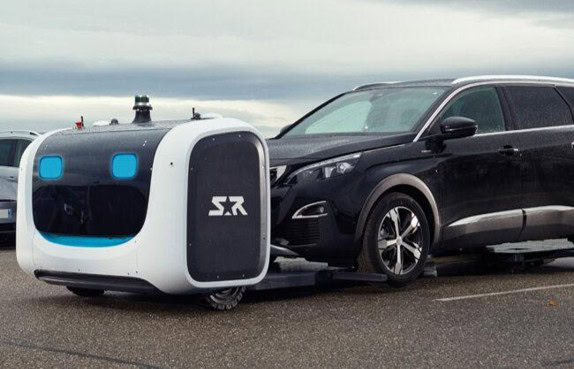
Stanley Robotics designs robots capable of automatically moving, lifting and organizing vehicles within logistics yards. By combining mobile robotics, intelligent software and automated operations, the company is transforming automotive flow management and paving the way for logistics that are more efficient, more seamless and more intelligent.

French technology deployed on international markets

After several years of successful operations in Europe, Stanley Robotics is entering a new phase with a major project in Canada, in the Finished Vehicle Logistics sector.

This deployment represents a significant milestone: the integration of autonomous robots into finished vehicle logistics in North America. Prior to this phase, a proof of concept carried out in Ontario during the winter and spring of 2022/2023 validated the robustness of the solution under particularly demanding climatic conditions.

This transition from pilot project to deployment illustrates a key challenge for European industrial players: designing solutions capable of moving beyond their domestic market to meet international operational standards.

In a context where logistics is being reinvented on a global scale, automation, electrification and energy reliability are becoming major drivers of competitiveness.

Embedded energy: a condition for global performance

In this type of application, the battery is not merely a component. It becomes a direct condition for availability, safety and operational performance.

A logistics robot must operate over long periods of use, withstand repeated cycles, remain available, recharge efficiently and guarantee a high level of long-term reliability — whatever the field constraints, climate conditions or pace of operation.

Energy mastery therefore becomes a strategic lever to ensure operational continuity in demanding industrial environments, in France, across Europe and on international markets.

This is precisely where PowerTech Systems brings its expertise: intelligent, modular and reliable lithium solutions designed for high-demand professional applications.

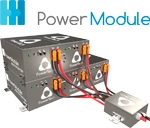
With the PowerModule®, PowerTech Systems meets the needs of industrial systems requiring power, modularity, safety and tailored integration. Designed for industrial electric vehicles, AGVs, robotics, traction and stationary applications, the PowerModule® embodies a system-based approach to energy.

More than a battery, it is a complete architecture, controlled and monitored in real time.

PowerTech Systems: supporting French industry beyond its borders

This project with Stanley Robotics fully illustrates how PowerTech Systems supports the evolution of industrial use cases: autonomous robotics, electrification, professional mobility and intelligent logistics.

It also demonstrates the ability of French technologies to address international markets with concrete, robust and scalable solutions.

For PowerTech Systems, internationalization is not simply about exporting technology. It means designing systems capable of adapting to varied use contexts, different climatic constraints and high levels of operational requirements.

This vision drives our development: providing industrial players with reliable, intelligent and integrable battery systems, capable of supporting their machines in the most demanding conditions.

At PowerTech Systems, we believe that energy performance is not only about storing energy. It is about mastering it, integrating it and making it reliable over time.

PowerTech Systems — from French expertise to international markets, mastered energy for autonomous industry.

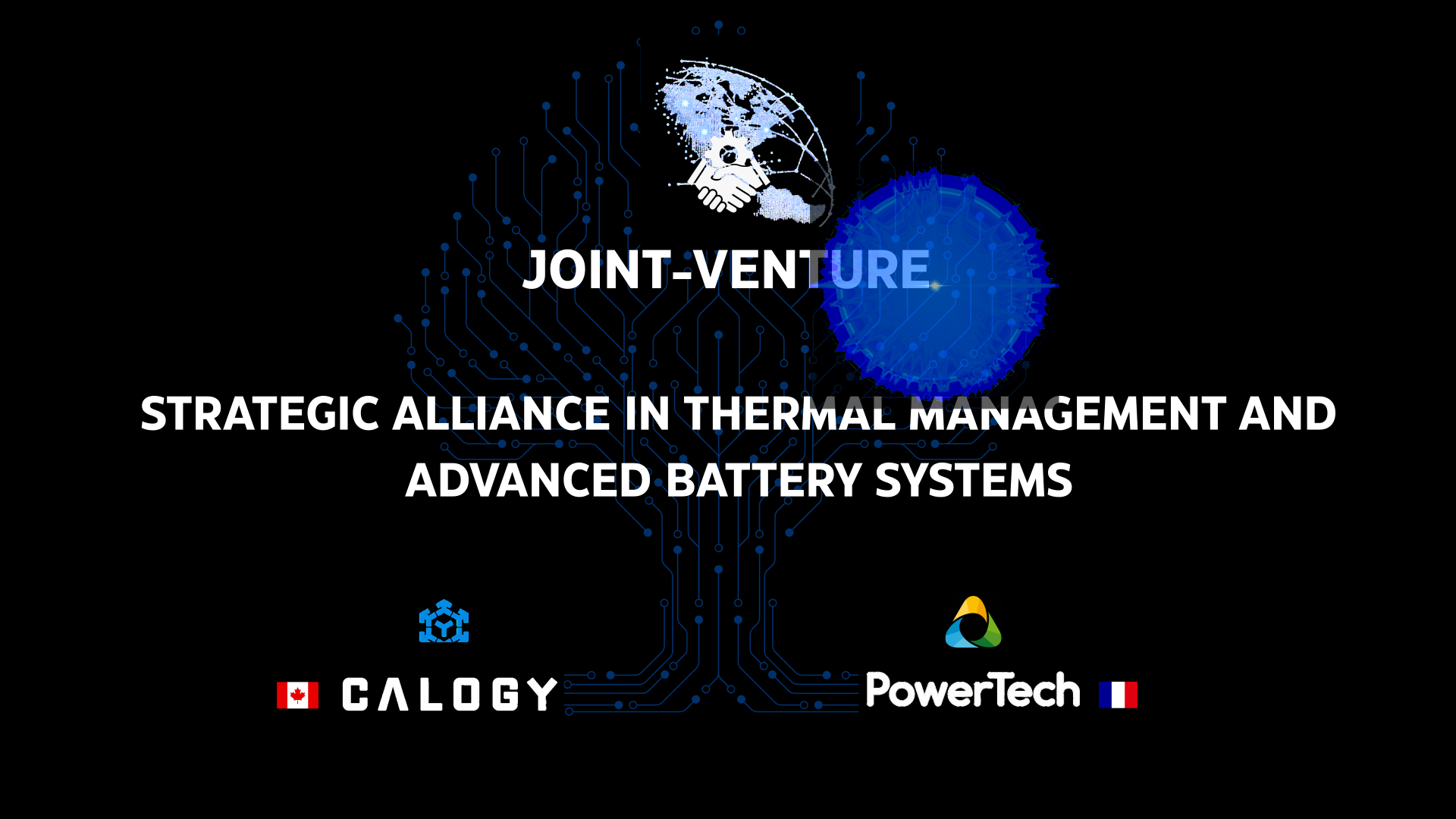
PowerTech Systems and Calogy Solutions unveil their strategic alliance in advanced batteries and thermal management at VivaTech.

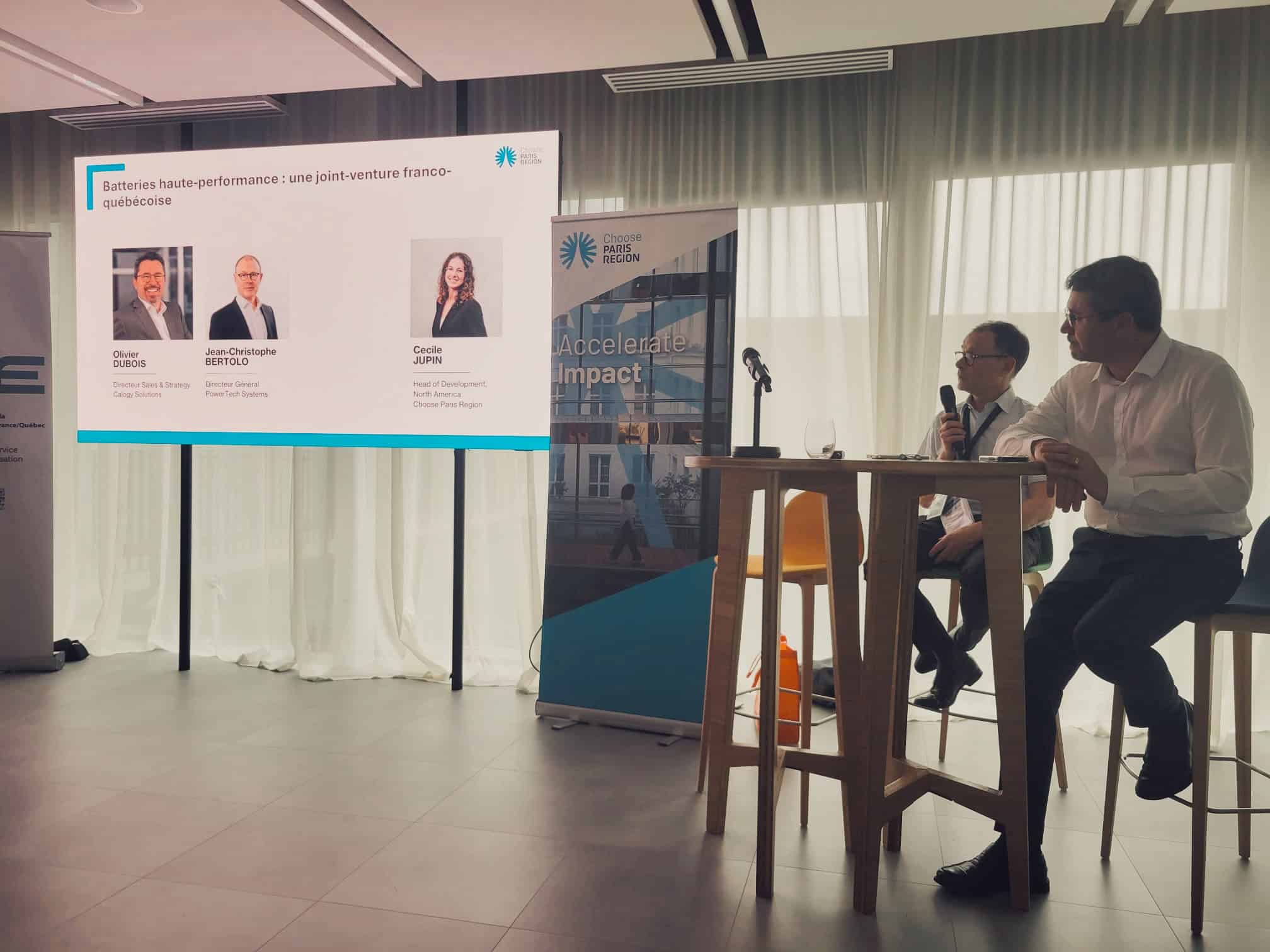
On Monday, June 15, 2026, PowerTech Systems had the pleasure of speaking at the Nouveau Campus Publicis, as part of the VivaTech side event: “Île-de-France and Québec innovate together to address energy challenges”.

This key moment highlighted the cooperation between the Île-de-France Region and Québec, united by a shared ambition: accelerating the energy transition through concrete, sustainable and forward-looking industrial partnerships.

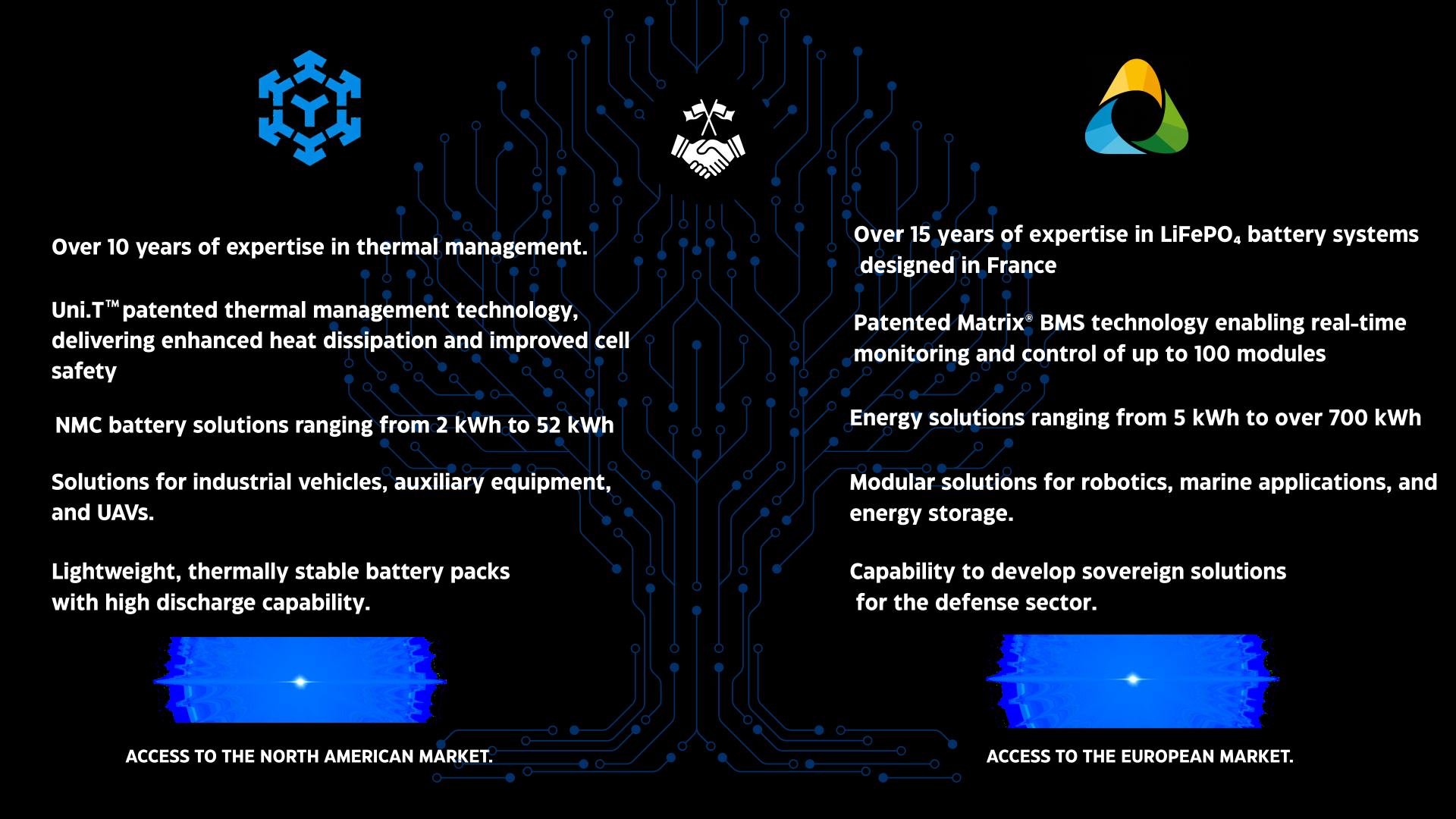
On this occasion, we presented the Joint Venture between PowerTech Systems and Calogy Solutions, a strategic alliance bringing together two complementary areas of expertise: our know-how in lithium-ion battery systems, battery architecture and BMS technologies, combined with Calogy’s advanced thermal management expertise.

This Franco-Québec collaboration paves the way for a new generation of battery solutions: safer, more efficient, more compact and better suited to demanding applications in electric mobility, marine, mobile robotics, special-purpose vehicles and complex environments.

In the face of today’s energy challenges, we are convinced that the strongest solutions are built together, through collaboration between regions, industrial players and innovation stakeholders.

To access our new solution, please click on the button. By completing the form, you will be able to be contacted by our team to learn more.

Access to the new solution

Not just storing energy — controlling it.

No block ID is set

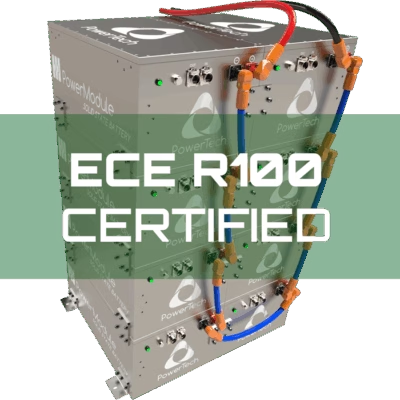
The PowerModule is now ECE R100 Rev 2 certified

PowerModule battery system is certified ECE-R100 Revision 2

R100 Rev2 certification: a key pillar for electric mobility

R100 certification plays a fundamental role in the safe development of electric mobility, a key sector in the energy transition. Among the many challenges to be met, the safety of lithium-ion batteries, the dominant technology in this field, is crucial. These batteries stand out for their energy density and power, as well as their ease of use when charging and discharging. However, they also present significant risks, particularly in terms of fire.

That’s why battery certification has become essential. Several standards govern their manufacture, transport and use. For example, the UN38.3 standard is mandatory for the transport (by road, air or sea) of lithium-ion batteries from 100 units produced. The CE mark, meanwhile, certifies compliance with European requirements, particularly in terms of electromagnetic compatibility (EMC).

What is ECE R100 certification?

R100 Rev2 certification is a European type-approval for electric road vehicles. Initially focused on powertrain safety requirements, the revised version, in force since 2016, imposes a series of rigorous new tests to validate the safety of battery packs.

To obtain R100 certification, batteries must prove their robustness under extreme conditions:

  • Vibrations
  • Mechanical shocks
  • Crushing under 10 tons
  • Thermal shocks and cycling
  • Fire resistance (over 2 minutes on a diesel fire)
  • Short circuit protection
  • Overload protection
  • Deep discharge protection
  • High temperature resistance

These tests require a high level of engineering. The mechatronic design and robustness of the BMS (Battery Management System) are therefore crucial.
Without this certification, an electric vehicle cannot legally circulate in Europe.

The R100 certification of the PowerModule is valid for M1 and N1 category vehicles:

  • Category M1 vehicle: a vehicle designed and constructed for the transport of persons and comprising, in addition to the driver’s seat, not more than eight seats
  • Category N1 vehicle: a vehicle designed and constructed for the transport of goods with a maximum weight of not more than 3.5 tonnes

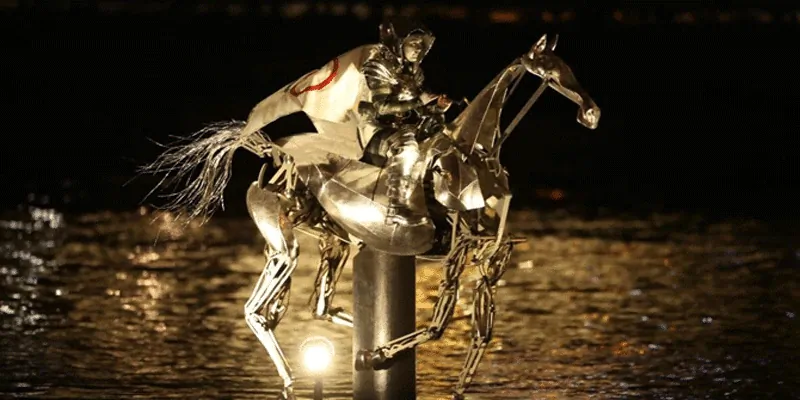
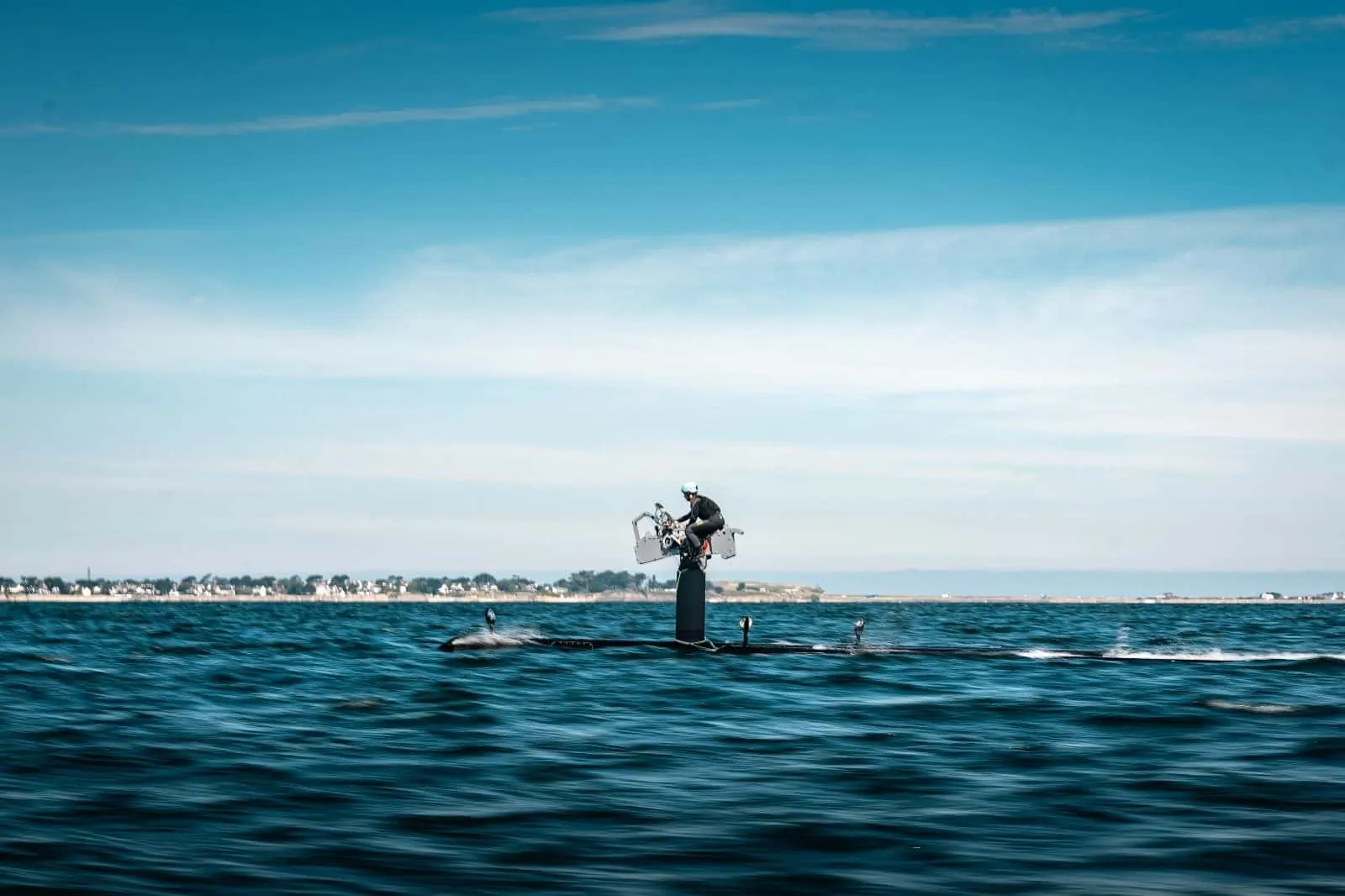
Zeus’ride powered by PowerModule at Paris 2024 Olympics

Zeus'ride powered by PowerModule
A symbol of resilience, peace, solidarity and unity. The “horse” that rode through Paris on the occasion of the opening ceremony embodies the values at the heart of the partnership between PowerTech Systems, Atelier BLAM, MM Process, Transfluid and Paris 2024.

As well as being a powerful symbol, Zeus ride is also the result of the know-how and spirit of scientific and artistic innovation of a group of French companies.

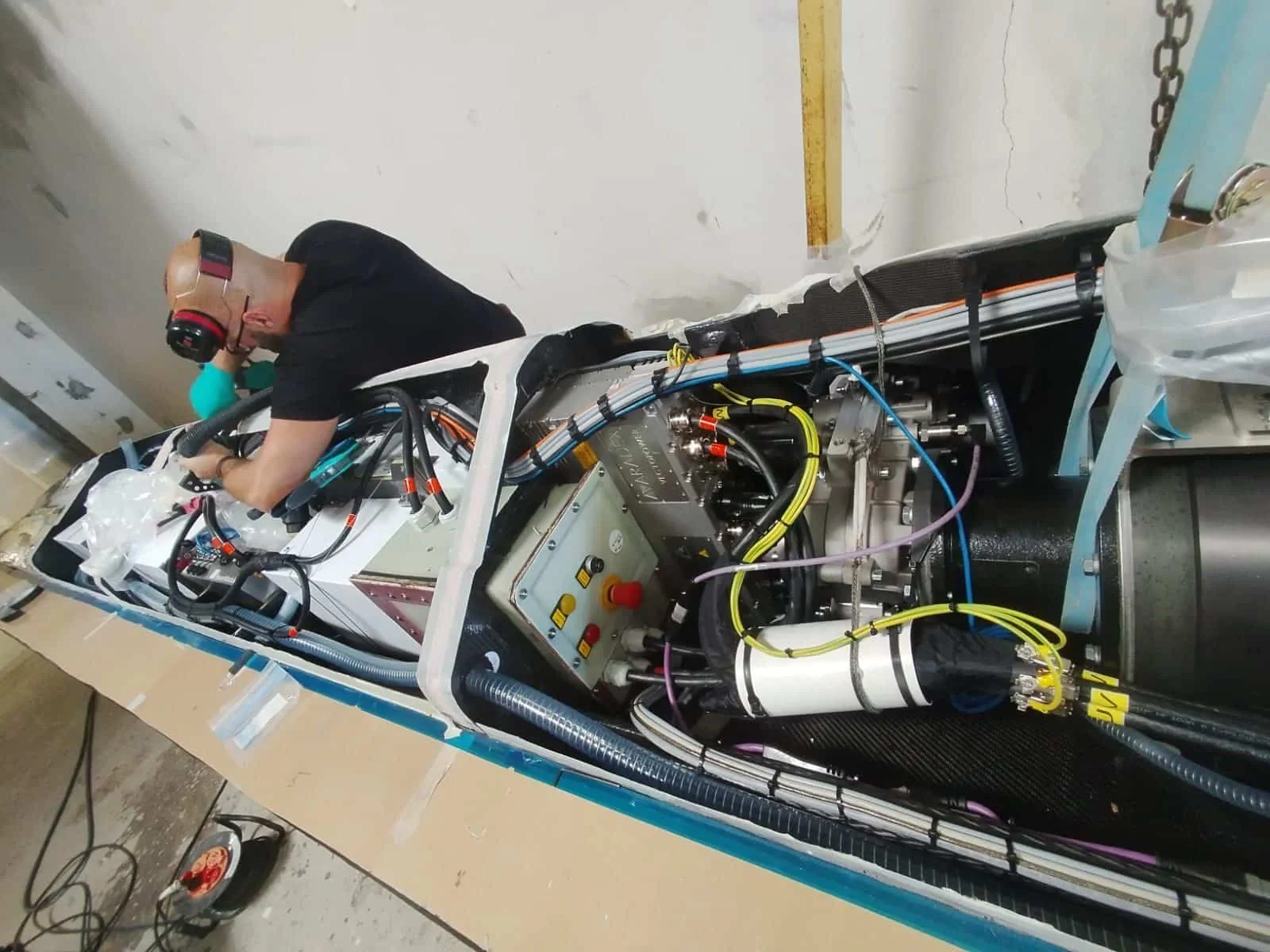
The prototype is powered by a 130kW 384V motor, assembled inside the hull.

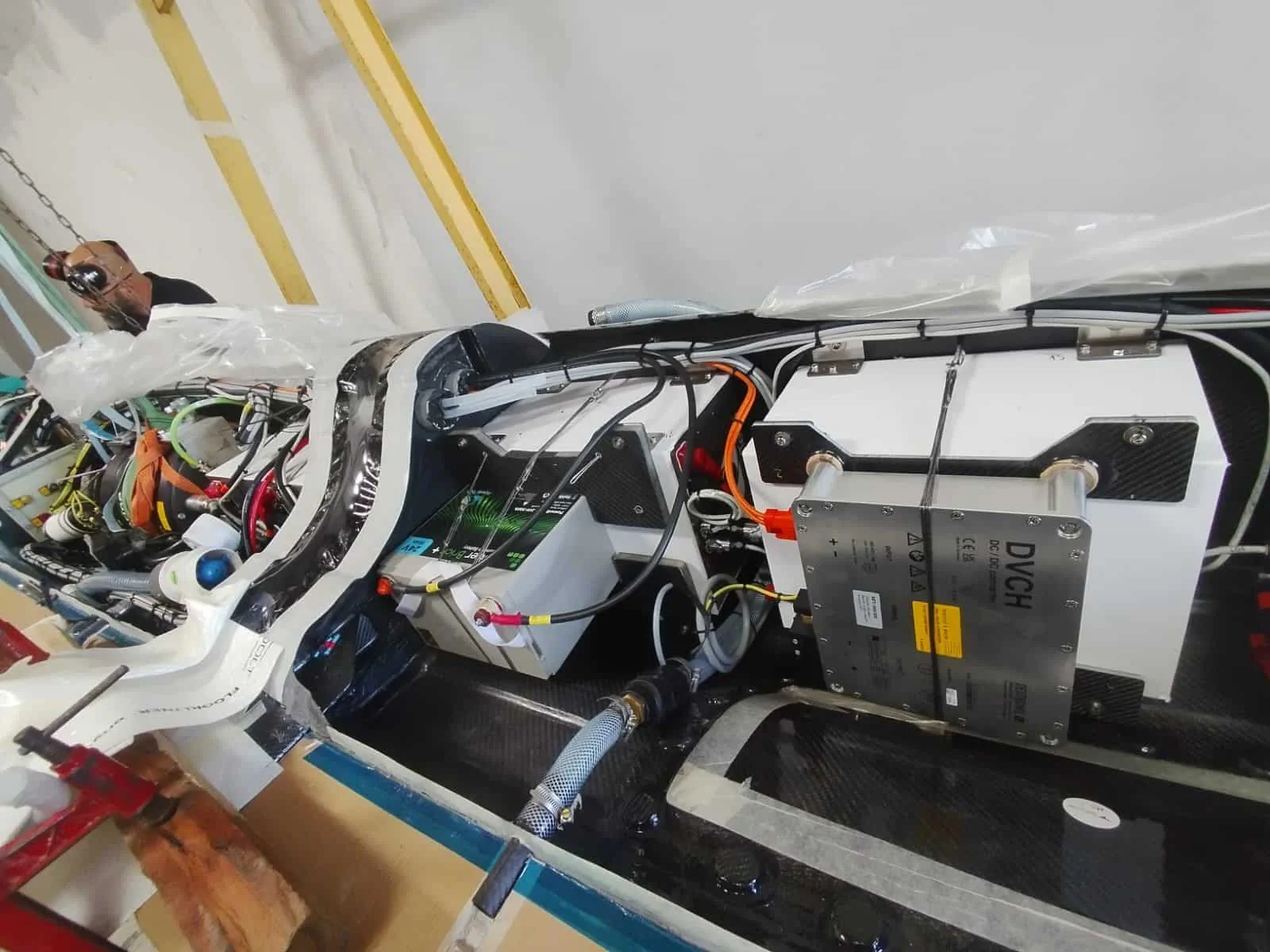
In addition to this, the central hull contains most of the electrical components, including energy storage:
-16 x PowerModule 48V (86kWh) propulsion batteries, batteries certified by Bureau Veritas ESTRIN
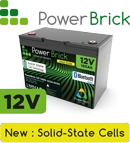
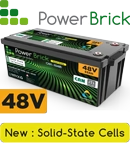
-1 x PowerBrick 48V-105Ah battery for the horse mechanism (5.37kWh)
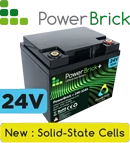
-1 x PowerBrick 24V-50Ah battery for control and lighting (1.2kWh).

Zeus ride is a true technical challenge and a scene forever engraved in the eyes of the whole world. This is undoubtedly one of the most memorable creations of the Olympic Games Opening Ceremony.

Use Case : Energy optimization with solar panels and batteries

Energy optimization with solar panels and batteries

For our business needs, we’ve been thinking about optimizing our energy consumption with solar panels and batteries.
The start of this process coincided with the receipt of our energy bill for December 2022. For the first time, it had exceeded the psychological threshold of 10K Euros…

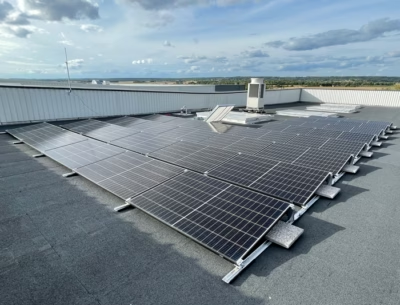
So it was time to install solar panels on our roof and store this energy in our batteries, finally sending it back to our building in the form of three-phase, 30KW continuous current.
The special feature of the system is that this energy source is configured in parallel with the building’s power supply. If the batteries are empty, the building’s power supply will be provided by our energy supplier. If there is a power cut, the batteries will take over to continue supplying the building.

In normal operation, the batteries should provide enough power to compensate for our consumption without using the building’s power supply.
The solar system consists of 32 solar panels with a peak power of 420W, giving a theoretical peak power of 13KW. This isn’t enough to cover the building’s needs, but it does produce enough power to offset a good part of our consumption.

solar panels for energy storage using PowerModule

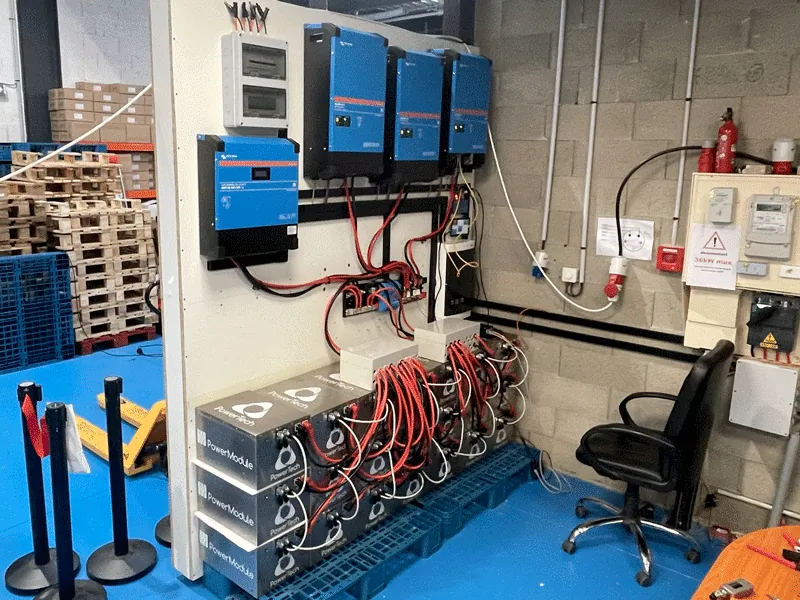
Three-phase production is provided by three VICTRON Multiplus 10KW configured for three-phase 400V, connected directly to the building’s electrical input.

For energy storage, we use 27 PowerModules in parallel, i.e. 145KWh of storage, which covers the entire daily consumption in winter.

To ensure that the battery is 100% charged every morning, a top-up charge is programmed every night from the electrical grid. This charging is carried out at an “off-peak” rate, i.e. at around 50% less than the full rate.
Commissioned in June 2023, this system enables us to reduce our electricity bill by 60-70%. The savings achieved depend on sunshine conditions throughout the year.